Business
Non-Disclosure Agreement (Unilateral) - A Complete Guide
Protect your confidential information with our free Unilateral NDA template. Customize instantly with AI and ensure compliance in 2026.
A unilateral Non-Disclosure Agreement helps when one party needs to share sensitive info. The other party must keep it secret.
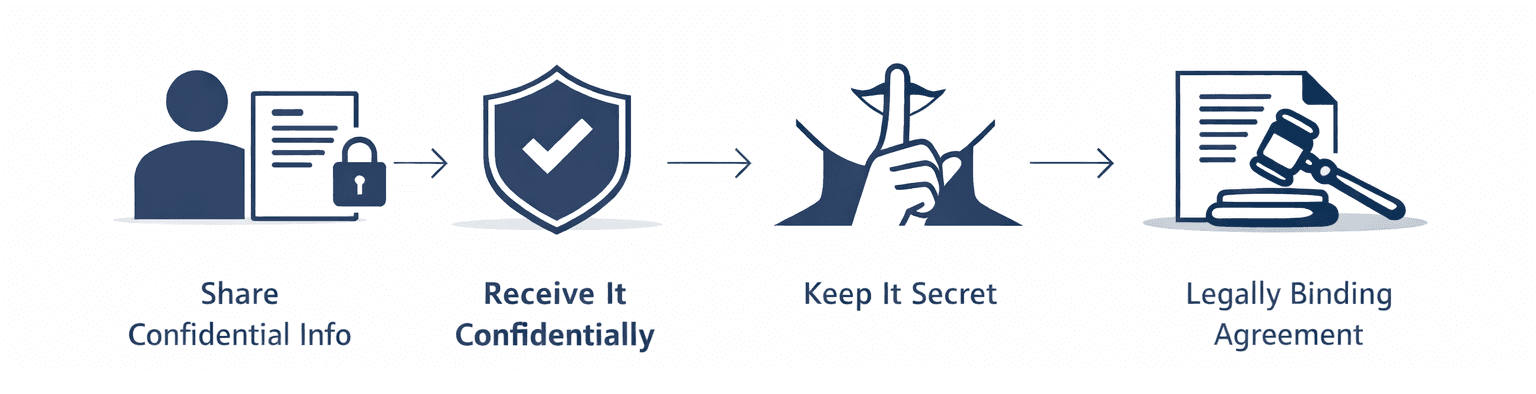
NDAs are top documents for keeping specific information secret. Businesses use these agreements to protect valuable private information.
This document works when secret information travels in one direction. You need legal limits around that sharing right from the start.
You can download the free Unilateral Non-Disclosure Agreement Template or customize one with our AI Generator.
This guide is part of our NDA Agreements series. We design it to make business legal documents more practical and easier to use.
You Might Also Like:
When Do You Need a Unilateral NDA?
You need a unilateral Non-Disclosure Agreement when sensitive information moves one way. The other party needs access to review, evaluate, or work on something for you.
This happens before investor pitches, contractor onboarding, partnership talks, product reviews, or early-stage business talks. You are the one sharing private information first.
The point is simple. Details like product plans, pricing, internal processes, customer data, or technical materials leave your side. You need clear rules around how that information can be used.
A unilateral Non-Disclosure Agreement sets those limits before the talk gets specific.
In real life, the cost of getting this wrong can be significant. In Contour Design, Inc. v. Chance Mold Steel Co., Ltd., a company shared confidential product information with its manufacturer under an NDA, and the manufacturer later sold materially identical versions of the products under different names. A jury awarded $7.7 million in compensatory damages. That is why the limits on use need to be clear before confidential information leaves your side
What Should a Unilateral NDA Clearly Define?
A unilateral Non-Disclosure Agreement only works when it removes gray areas. You must clearly define what counts as secret information first.
That can include technical materials, financial data, product plans, internal processes, supplier details, customer lists, or other private business information.
WIPO explains that valuable information is protected when it stays secret. It has commercial value because of that secrecy. It is covered by reasonable steps to keep it secret. This includes confidentiality agreements.
You should also define why you are sharing the information. Is it for evaluating a potential deal, reviewing a product, discussing a partnership, or doing contract work?
This part matters. If the purpose is vague, the receiving party has more room to argue for broader use.
A strong NDA should also include basic exclusions. Information that's already public, already lawfully known, or developed independently shouldn't be treated as protected secret material.
Then comes duration and what happens to the materials after the talk ends. Not every NDA should last forever in the same way.
WIPO notes that trade secret protection can continue as long as the information remains secret. However, some courts treat perpetual confidentiality more skeptically. This happens when the information doesn't rise to the level of a trade secret.
An American Bar Association paper discusses cases taking that approach.
Unilateral vs. Mutual NDA
A lot of people mix these up, but the difference is simple. A unilateral NDA is used when only one side is sharing confidential information. A mutual NDA is used when both sides expect to exchange sensitive information. WIPO puts it directly, and Nolo’s sample NDA reflects the same distinction in practice.
Type of NDA | When it fits | Who shares confidential information | Example |
|---|---|---|---|
Unilateral NDA | One-sided disclosure | One party shares, the other receives and protects it | A startup shares product specs and pricing logic with a manufacturer before production starts |
Mutual NDA | Two-sided disclosure | Both parties share confidential information | Two companies exchange financial, technical, or customer information while discussing a partnership |
Common NDA Mistakes That Make the Document Weaker
A weak unilateral Non-Disclosure Agreement is not always the one with missing clauses. Sometimes the bigger problem is how you use the document in real life.
One common mistake is signing the NDA after sensitive information has already been shared. At that point, the document may still help going forward. However, it does much less to protect what has already been shared.
Another problem is treating the NDA like a complete protection strategy on its own. Even a well-written agreement becomes weaker if secret files are shared too widely. This happens when they are sent without access limits. It also happens when they are left in inboxes and shared folders long after the talk ends.
There is also a practical mistake people miss all the time. They rely on the NDA, but keep no record of what was actually shared.
If a dispute comes up later, it is much easier to enforce confidentiality when you can show what documents, files, or materials were shared and when.
The takeaway is simple: a strong NDA is not just about wording. It also depends on timing, access control, the right document structure, and a clear record of what was shared.
Can You Create a Unilateral NDA with AI?
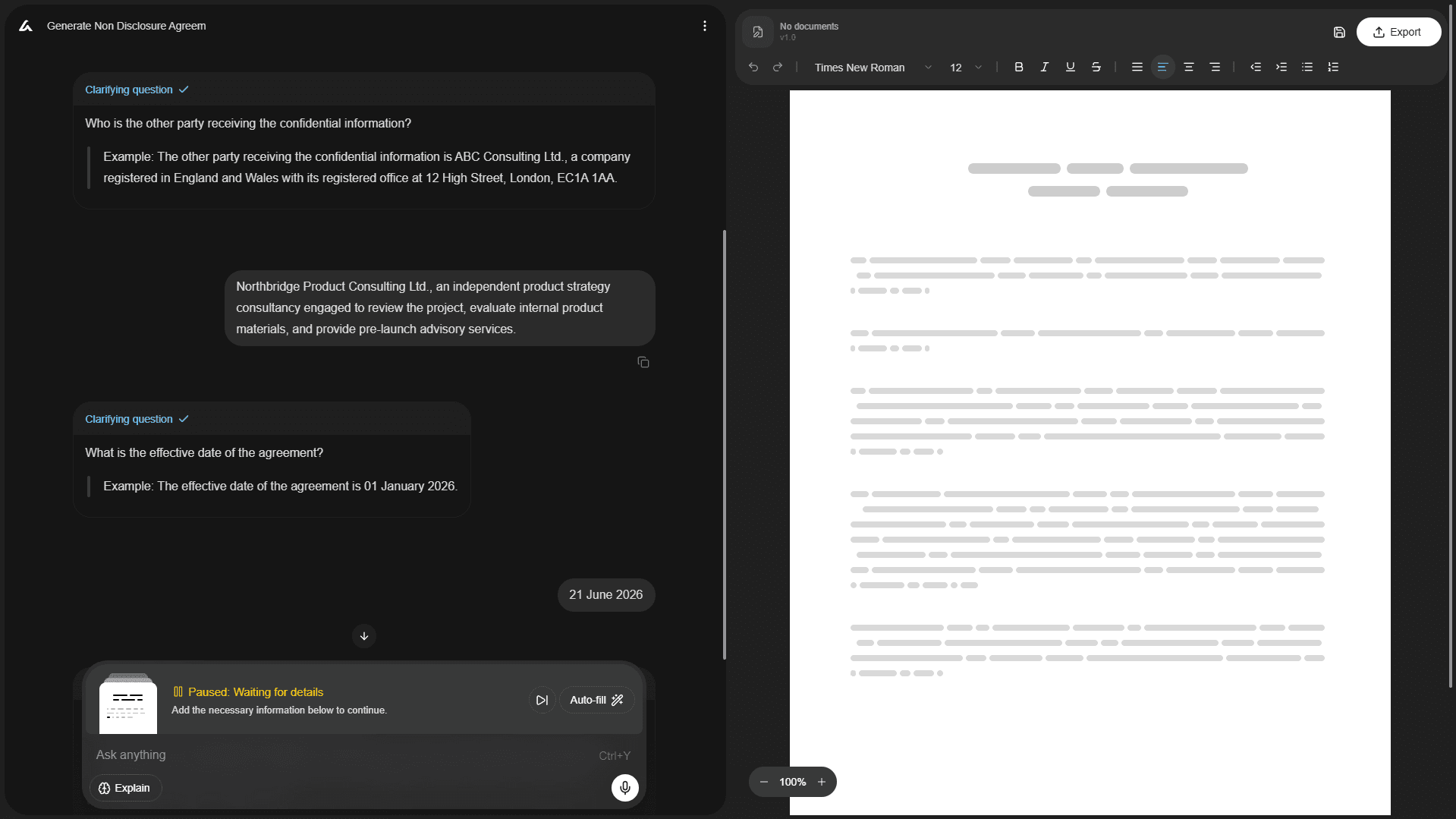
Yes — but the useful part isn't getting text fast. It means making sure the document reflects the actual disclosure. It should say what is being shared, why it is being shared, what is excluded, how long confidentiality lasts, and what happens to the materials afterward.
This matters even more now because AI is already becoming part of legal drafting workflows.
Thomson Reuters notes that 80% of professionals believe AI will change their work within five years.
The ABA also recognizes that generative AI is already being used in legal work. However, this comes with clear duties around competence, confidentiality, and oversight.
AI works best here when it acts less like a text machine and more like a structured intake process. Instead of dumping out a generic NDA in one shot, the better approach guides the user through the details that shape the agreement.
This includes several key points: what information is secret, who receives it, what the permitted purpose is, which exclusions apply, and whether the materials must later be returned or deleted. The draft should get clearer as those answers come in. It should not stay vague and hope the user fixes it afterward.
How a Unilateral NDA Works in Practice
A clear example of a unilateral NDA is a startup sharing confidential product materials with an outside manufacturer before production begins. For example, a company developing a smart home device may need to send the manufacturer its product specifications, technical drawings, pricing assumptions, and testing notes to see whether the product can be made at scale.
In that situation, the information moves one way. The startup is disclosing sensitive business and technical information, while the manufacturer is only receiving it for a limited purpose. The NDA should make that clear: the manufacturer may review the materials only to evaluate production, cannot share them with anyone else, cannot use them for another client or project, and must return or destroy them if the deal does not move forward.
That is what a unilateral NDA looks like in practice: one side shares confidential information, the other side gets limited access, and the document sets strict boundaries around use, disclosure, and retention.
Unilateral NDA FAQ
Q: What is a unilateral NDA?
A: A unilateral NDA is used when one party shares secret information and the other party agrees to protect it and not share or misuse it.
Q: When do I need a unilateral NDA?
A: You need it when sensitive information moves one way. This includes before investor pitches, contractor onboarding, partnership talks, product reviews, or early-stage business talks.
Q: What should a unilateral NDA clearly define?
A: It should define what counts as secret information. It should also explain why it is being shared, what exclusions apply, how long confidentiality lasts, and what happens to the materials after the relationship ends.
Q: What is the difference between a unilateral and a mutual NDA?
A: A unilateral Non-Disclosure Agreement is for one-way disclosure. A mutual NDA is for situations where both sides expect to exchange secret information.
Q: What common mistakes make a unilateral NDA weaker?
A: Common mistakes include signing it after information has already been shared. Others include using the wrong NDA structure, sharing files too widely, and keeping no record of what was shared.
Q: Can you create a unilateral NDA with AI?
A: Yes, but the draft should reflect the actual details of the disclosure. This includes the secret information, permitted purpose, exclusions, duration, and return or deletion of materials.
Q: Can you give a simple example of a unilateral NDA?
A: A startup may share product plans, pricing logic, and technical documents with an outside consultant before launch. The consultant is required to keep that information secret and use it only for the agreed purpose.
Final Thoughts
A unilateral Non-Disclosure Agreement is not just a formality. It's what helps you share sensitive information without losing control over how that information gets used once it leaves your side.
If only one party is sharing secret business details, the agreement should stay clear, focused, and practical. Define what's protected. Explain why it's being shared. Set realistic limits. Make it clear what happens when the talk or working relationship ends.
That's what makes the document useful in real life — not how "legal" it sounds.