Business
AI Tools for Crafting a Business Plan: Strategy, Finance & Pitch
Discover top AI tools for business planning - automate market analysis, financial forecasting, and strategy development to create data-driven, investor-ready plans.
Creating a business plan with AI is no longer just about asking a chatbot to write an executive summary. The best AI business plan tools now support different parts of the planning workflow: idea validation, market research, competitor analysis, financial modeling, pitch materials, legal documents, and structured business planning.
This updated list focuses on tools that match real business needs: quick first drafts, complete business plans, loan applications, startup strategy, financial assumptions, pitch materials, and legal documents that usually come after planning.
Use this guide to choose the right AI business plan generator by use case, not by popularity. A tool that works well for a simple startup idea may not be enough for a bank application, investor conversation, internal strategy review, or detailed financial model.
You Might Also Like:
Quick Comparison: Best AI Business Plan Tools
Tool | Best for | Main use case |
|---|---|---|
Legal and business documents | Contracts, founder agreements, legal summaries, document review | |
Complete planning workflow | Business plans, financial planning, pitch decks, strategy templates | |
Fast plan drafts | Free AI-generated business plans for early-stage ideas | |
Loan and application plans | Structured business plans for banks, grants, and funding forms | |
Guided startup planning | Business plans, projections, market positioning, growth strategy | |
Startup storytelling and market structure | Market research, plan sections, pitch deck support | |
Idea validation | Turning rough startup ideas into structured business concepts | |
Polished startup materials | Business plans, pitch decks, capital-raising documents | |
Financial planning and tracking | Budgeting, cash flow, market research, performance monitoring | |
Strategy and valuation | AI business plans, valuation support, financial logic | |
Professional business plans | Formal plans, market analysis, financial sections | |
Financial modeling and reporting | Business plans, models, dashboards, pitch materials |
Why AI Business Plan Tools Matter in 2026
AI business plan tools matter because most users do not only need text. They need a plan that helps them make a decision, explain an idea, apply for funding, prepare for launch, or manage the business after the plan is written.
A founder may understand the product but struggle to describe the market. A small business owner may know the service but need help with startup costs, pricing, cash flow, hiring, and revenue assumptions. A consultant may need to create several client plans without rebuilding the same structure from scratch.
That is why the better question is not, “Which AI tool can write a business plan?” The better question is, “Which tool can help me create the type of plan I need right now?”
A quick draft is useful at the idea stage. A loan-focused plan needs repayment logic, realistic costs, and clear cash flow. A startup pitch needs market size, traction, positioning, and a strong business model. An internal plan needs priorities, timelines, ownership, and execution steps.
How to Choose the Right AI Business Plan Generator
Start with the final use of the plan. A one-page startup idea, a bank-ready business plan, and an investor pitch are different documents.
If you need speed, choose a simple AI business plan generator like Bizplanr, 15MinutePlan, VenturePlanner, or IdeaBuddy. These tools help when the main problem is getting structure quickly.
If the plan needs deeper business logic, use stronger AI business planning software like Upmetrics, LivePlan, VentureKit, ProAI, PrometAI, PlanPros, or Modeliks. These platforms are more useful when the plan needs market sections, numbers, strategy, pitch materials, or a format that can be shared with outside readers.
If the plan leads to legal or operational documents, AI Lawyer can support the next step. Founders may need a founder agreement, contractor agreement, privacy policy, service terms, vendor contract, or document review after the business plan is drafted.
Top AI Business Plan Tools
AI Lawyer
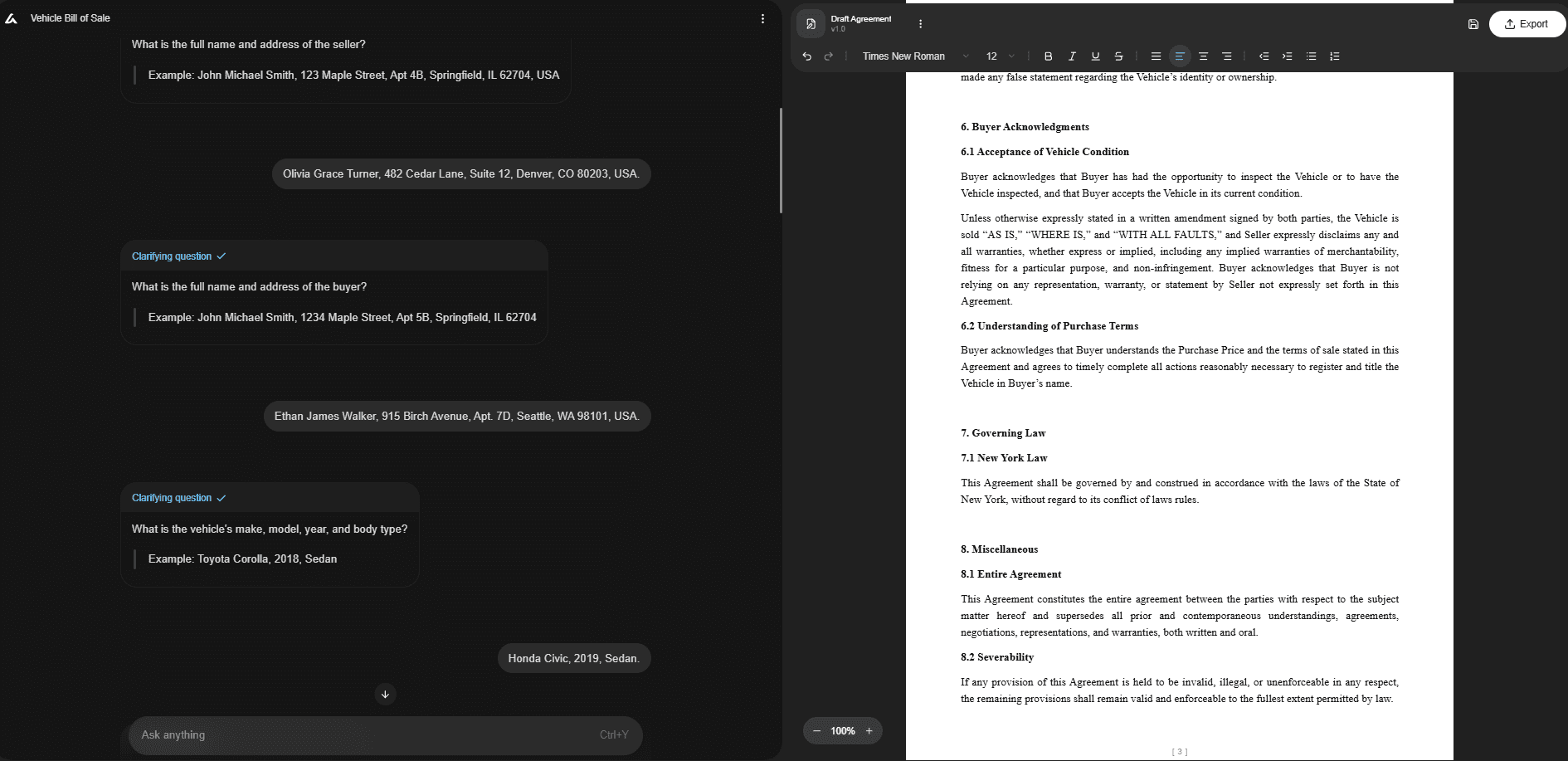
Best for: legal and business documents that support the planning process.
This platform is not a traditional business plan generator. Its main value is in the legal and document side of starting or running a business. It can help with legal summaries, document review, contract-related work, and business documents that often come after the planning stage.
For example, two co-founders may already have a clear business idea but still need a written agreement about equity, roles, decision-making, responsibilities, or what happens if one founder leaves. The platform can help prepare or review these documents before human legal review.
It is also useful when planning turns into execution: hiring contractors, publishing service terms, reviewing vendor agreements, or preparing basic legal documents for launch.
Best takeaway:
Use this option when your startup plan creates legal or operational next steps.
Upmetrics
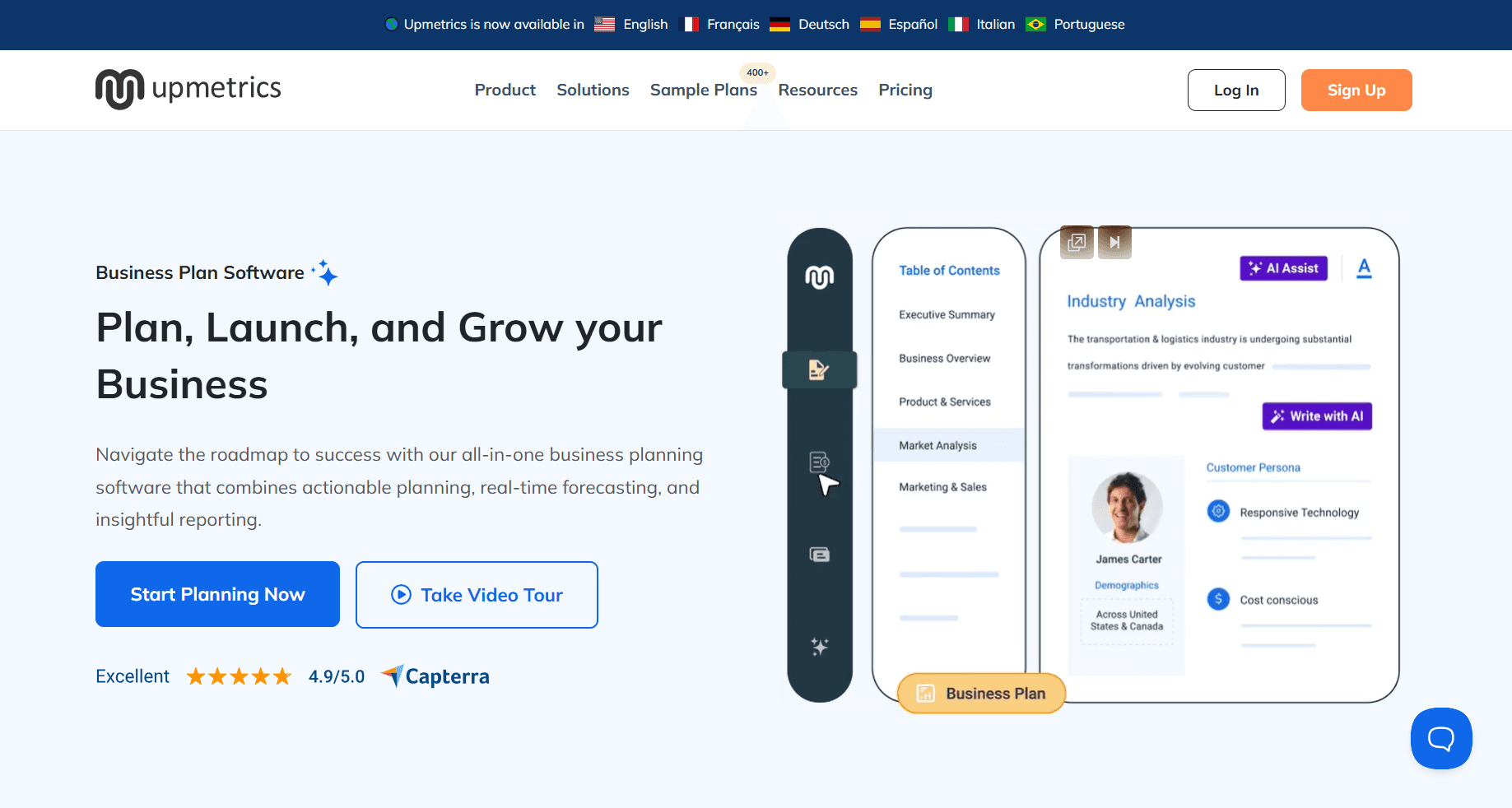
Best for: complete planning workflow with structure, numbers, and presentation support.
This workspace is a strong option for users who need more than a simple draft. It combines plan writing, financial planning, pitch materials, and strategy templates in one place.
For example, a founder launching a fitness studio may need startup costs, membership pricing, rent, payroll, break-even estimates, marketing channels, and a presentation for partners or lenders. A general AI writer can describe the idea, but this platform is better for turning it into a structured planning file.
This makes it useful for founders, consultants, and small business owners who want their written plan, numbers, and presentation materials to stay connected.
Best takeaway:
Choose this option when you need a complete planning workspace, not just written paragraphs.
Bizplanr
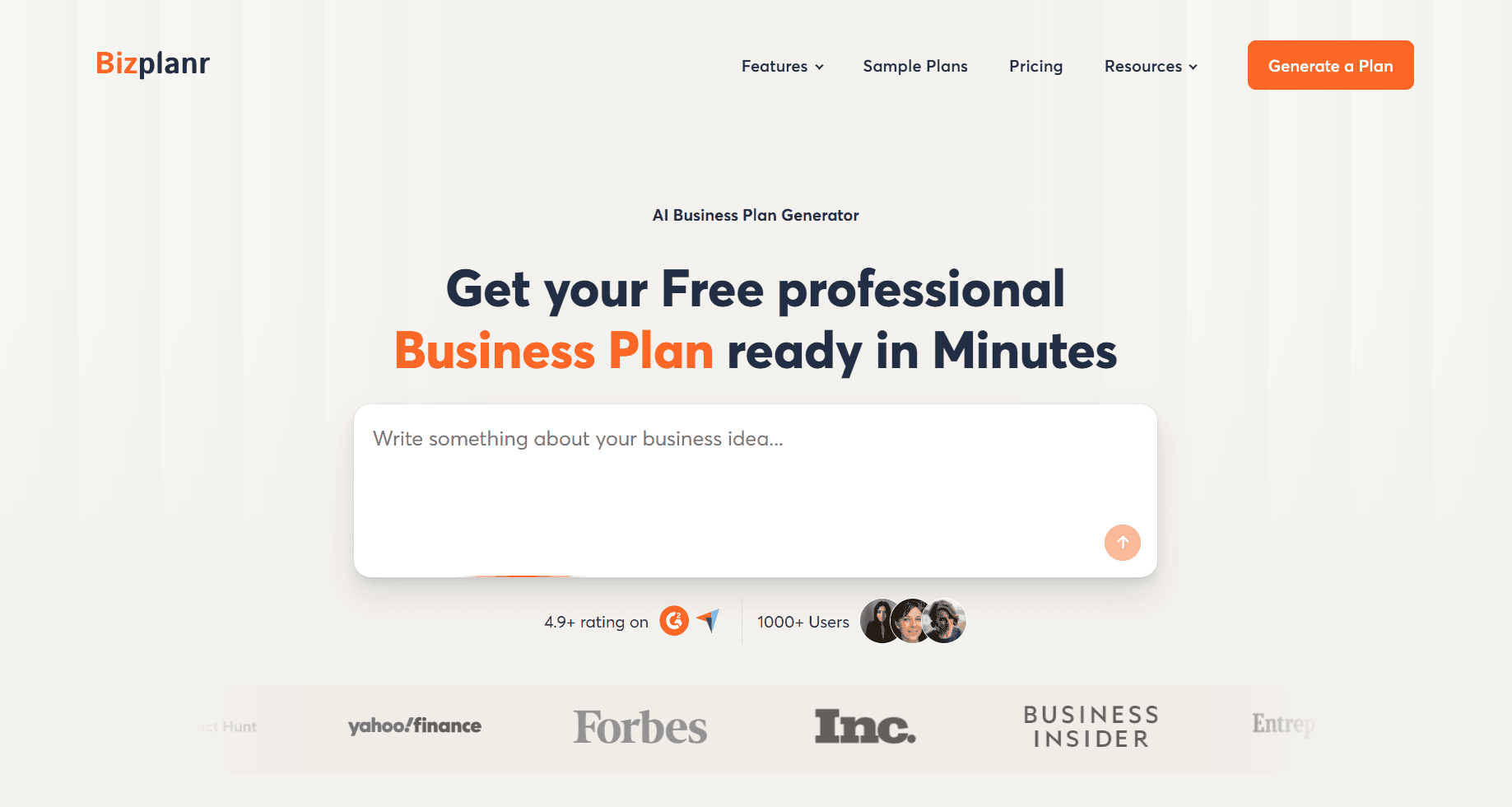
Best for: fast AI-generated drafts.
This tool works well when you need a quick starting point. It asks for basic business details and turns them into a structured first version.
For example, someone testing an idea for a mobile coffee cart can use it to outline the business overview, target customers, pricing, marketing, operations, and basic assumptions.
The result still needs local competitor research, real equipment costs, supplier quotes, and manual editing before it is used for serious decisions. But for early-stage planning, it helps users move from a blank page to a workable outline quickly.
Best takeaway:
Use this option when you need to move from idea to first draft fast.
15MinutePlan
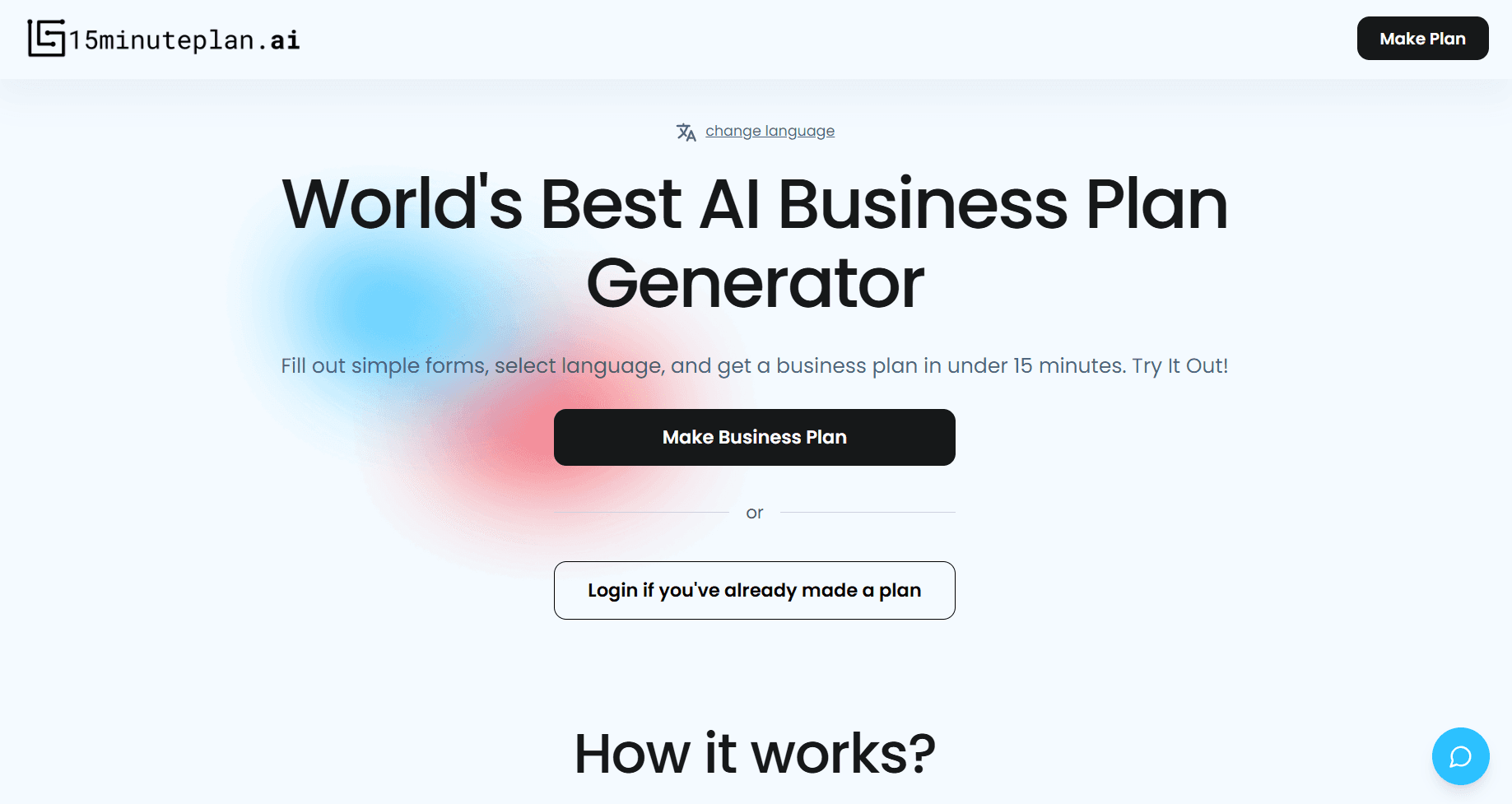
Best for: formal plans for banks, grants, and applications.
This platform is designed for users who need a structured document quickly. It is useful for entrepreneurs, students, and small business owners preparing materials for banks, grants, investors, or funding applications.
For example, a restaurant owner applying for a loan needs more than a story. The document should explain startup costs, expected revenue, expenses, funding use, customer demand, and repayment logic.
The main value is speed plus structure. It gives users a formal format without forcing them to build every section manually. Still, every financial number should be checked before submission.
Best takeaway:
Use this option when you need a formal plan quickly, but verify the numbers before sending it.
VenturePlanner
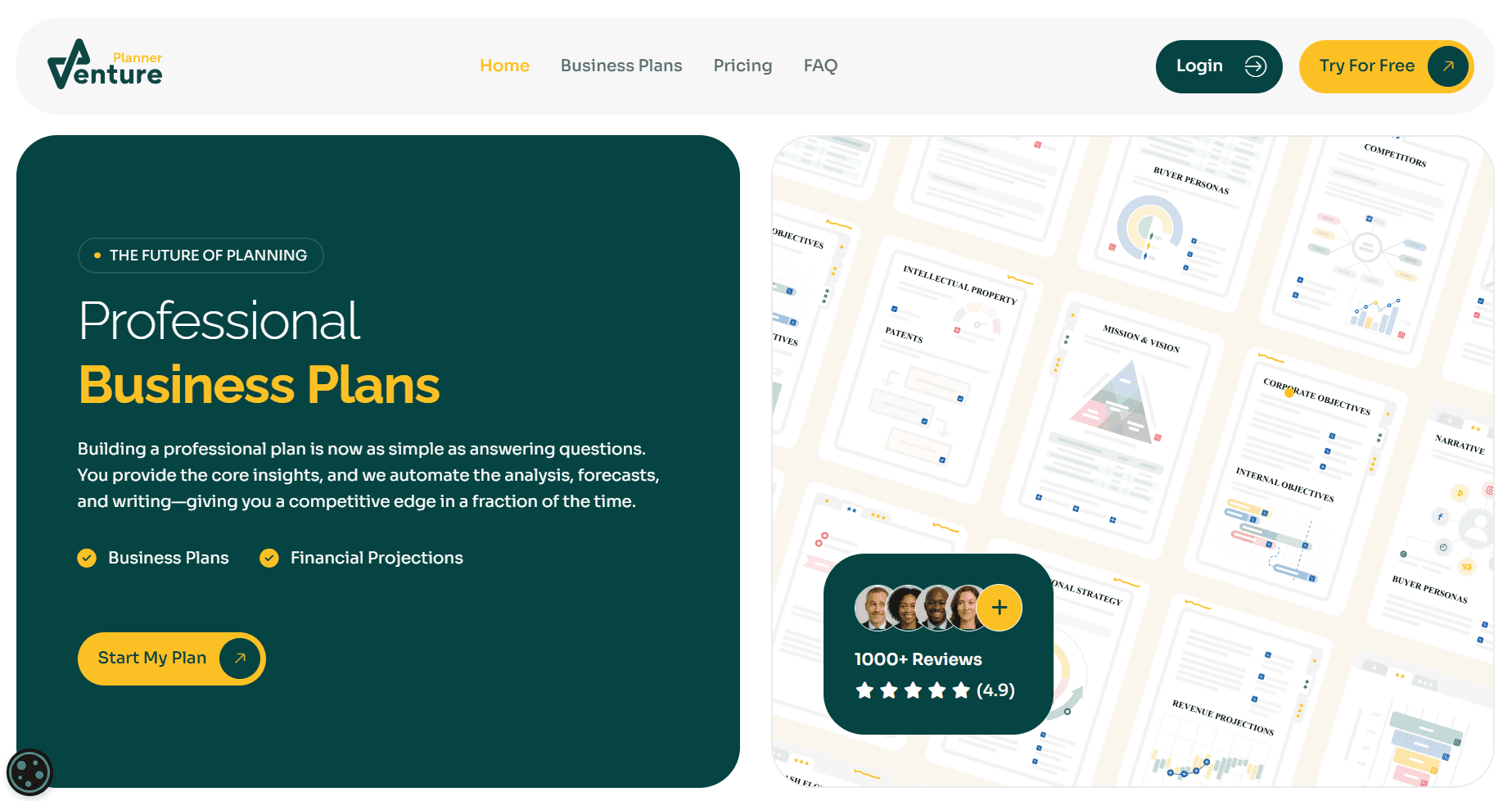
Best for: guided startup planning.
This tool helps users move through the planning process step by step. It is useful for founders who have an idea but do not know how to organize it into clear sections.
For example, someone launching a home cleaning marketplace may understand the concept but struggle with pricing, operations, customer segments, and revenue logic. The platform helps break those details into a more usable structure.
This is especially helpful for users who want guidance instead of an empty template. It makes planning feel more manageable by turning a large task into smaller decisions.
Best takeaway:
Use this option when you want guided planning instead of starting from a blank page.
VentureKit
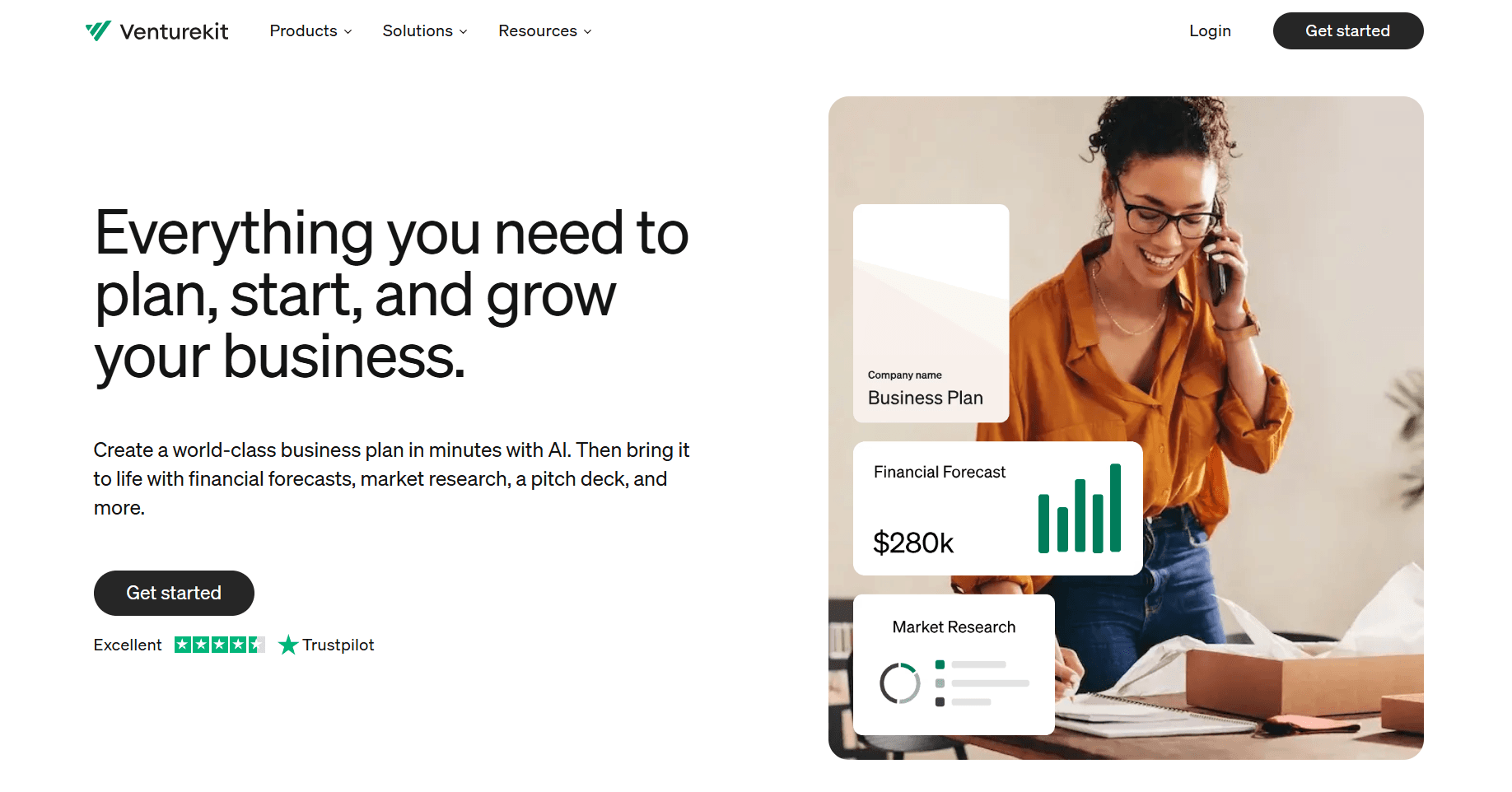
Best for: startup storytelling, market structure, and pitch support.
This is a strong match for users who want an AI-powered planning tool with more startup context. It can help organize market research, shape the business model, create plan sections, and prepare pitch-related materials.
For example, a founder building a subscription box startup can use it to define the target audience, value proposition, competitor landscape, marketing channels, and startup narrative.
Its main advantage is how it connects the idea, market, positioning, and pitch direction. That makes it useful when the plan needs to support conversations with partners, advisors, or potential backers.
Best takeaway:
Use this option when you need a startup plan with stronger market and pitch structure.
IdeaBuddy
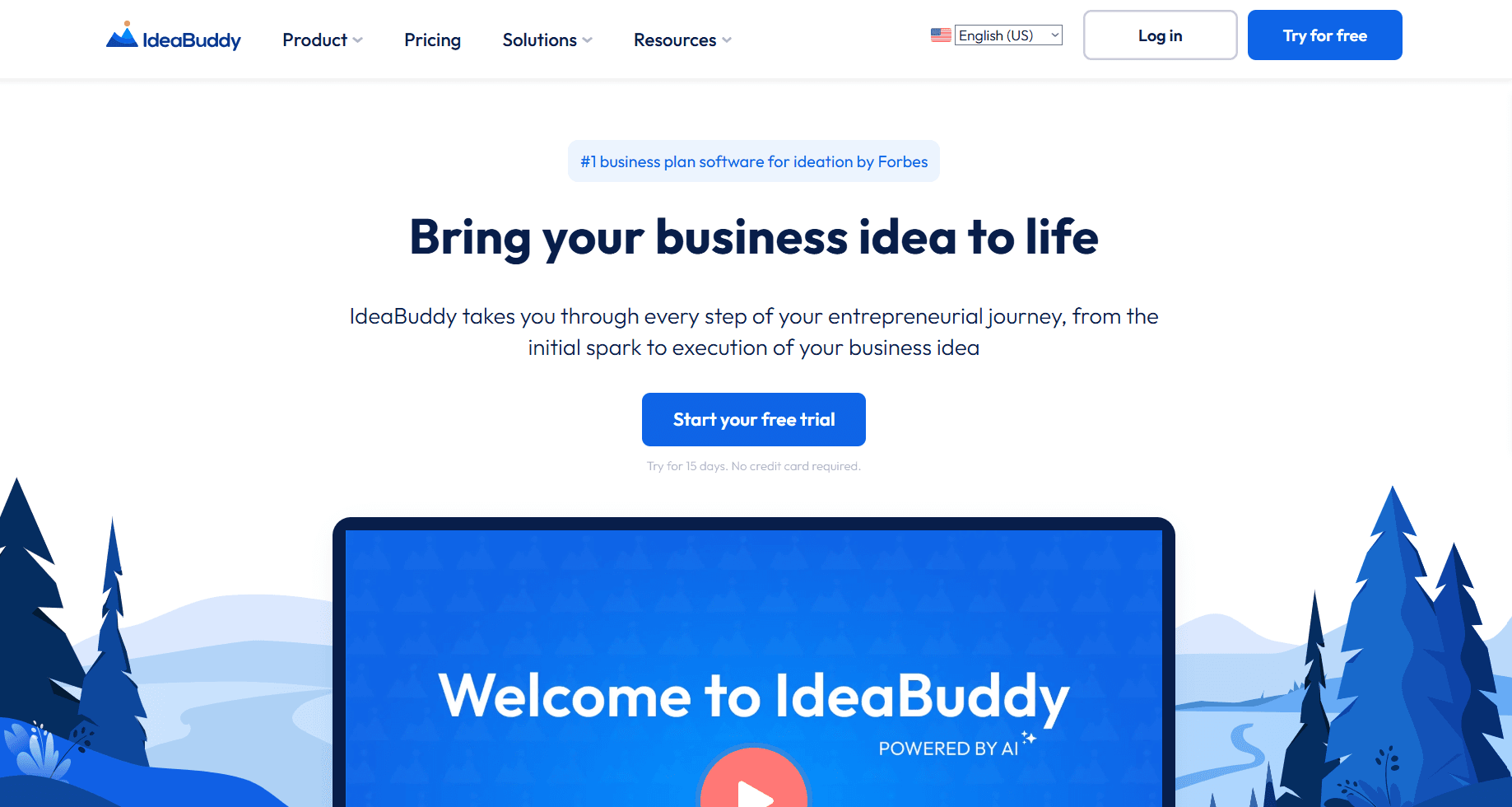
Best for: startup idea validation.
This platform is useful before the final plan is fully clear. It helps entrepreneurs shape rough ideas into customer segments, value propositions, revenue models, expense categories, and plan sections.
For example, someone considering a plant-based meal delivery service can use it to test the concept, organize products, define target customers, estimate costs, and build a basic structure.
This makes it a good fit for people who are still deciding whether the idea is worth developing. Instead of jumping straight into a full document, users can first clarify the concept and identify weak points.
Best takeaway:
Use this option when the main challenge is understanding the business idea before writing the final version.
ProAI
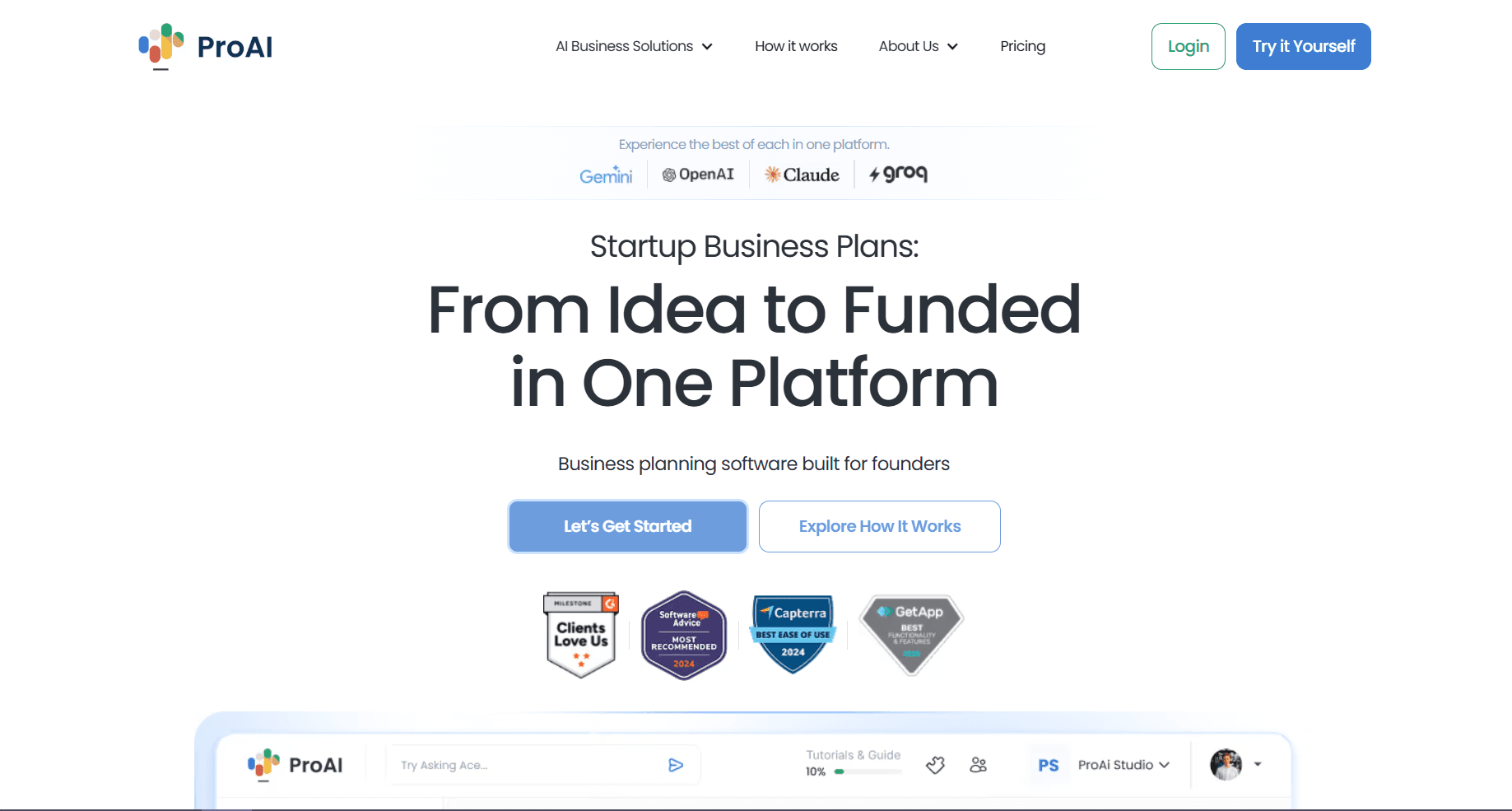
Best for: polished startup materials for external conversations.
This platform is built for users who need documents that feel polished and presentation-ready. It can help with business plans, pitch decks, startup strategy documents, and capital-raising materials.
For example, a B2B SaaS founder preparing for pre-seed outreach may need a clear company story, financial assumptions, market explanation, deck structure, and funding use section. The tool can organize these pieces into a more professional package.
The output may look strong, but users still need to verify market size, revenue assumptions, customer acquisition costs, and competitor claims. It helps with presentation and structure, while accuracy depends on the quality of the inputs.
Best takeaway:
Use this option when you need polished startup documents for investors, advisors, or partners.
LivePlan
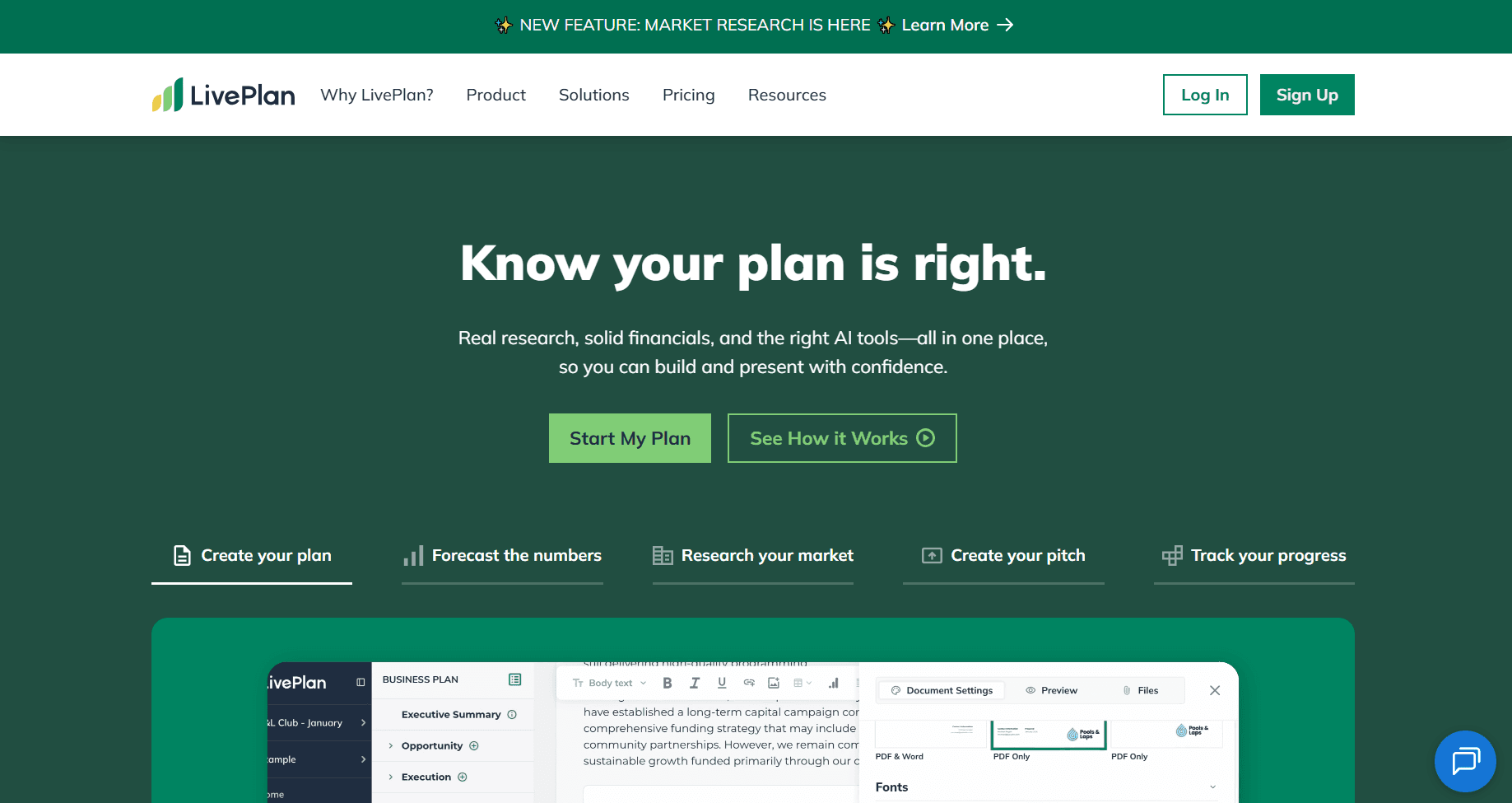
Best for: financial planning, budgeting, and performance tracking.
This platform is useful when planning needs to become a financial roadmap. It is a good fit for small businesses that need budgeting, cash flow planning, market research, and performance tracking over time.
For example, a landscaping company growing from one crew to three crews needs to estimate equipment, payroll, fuel, seasonal revenue, insurance, and expected profit. The tool helps show how these numbers change as the company grows.
It also works well for users who want to compare planned performance against real results. That makes it helpful after the plan is written, not only during the drafting stage.
Best takeaway:
Use this option when planning, budgeting, and performance tracking need to stay connected.
PrometAI
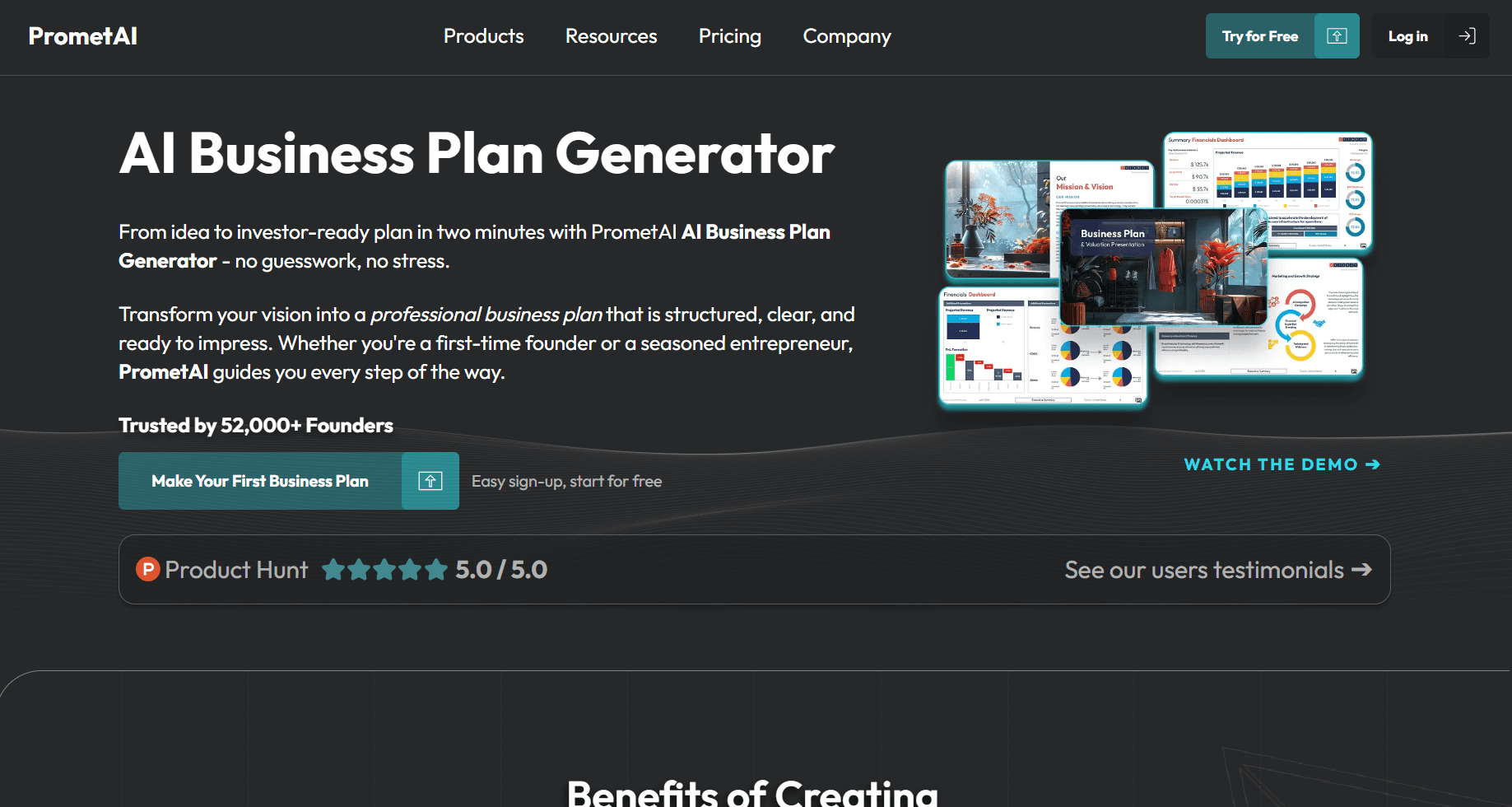
Best for: strategy, valuation, and financial logic.
This platform is built for founders who want more strategic depth. It can turn a raw idea into a structured document with business strategy, financial reasoning, valuation support, and sections designed for serious review.
For example, a founder preparing to pitch a new marketplace can use it to organize the revenue model, customer segments, pricing assumptions, competitive position, and valuation story before speaking with investors or advisors.
It stands out when the user needs to explain not only what the business does, but why the model makes sense. That makes it useful for founders who want to connect strategy, numbers, and business value.
Best takeaway:
Use this option when you need a plan that connects strategy, valuation, and financial reasoning.
PlanPros
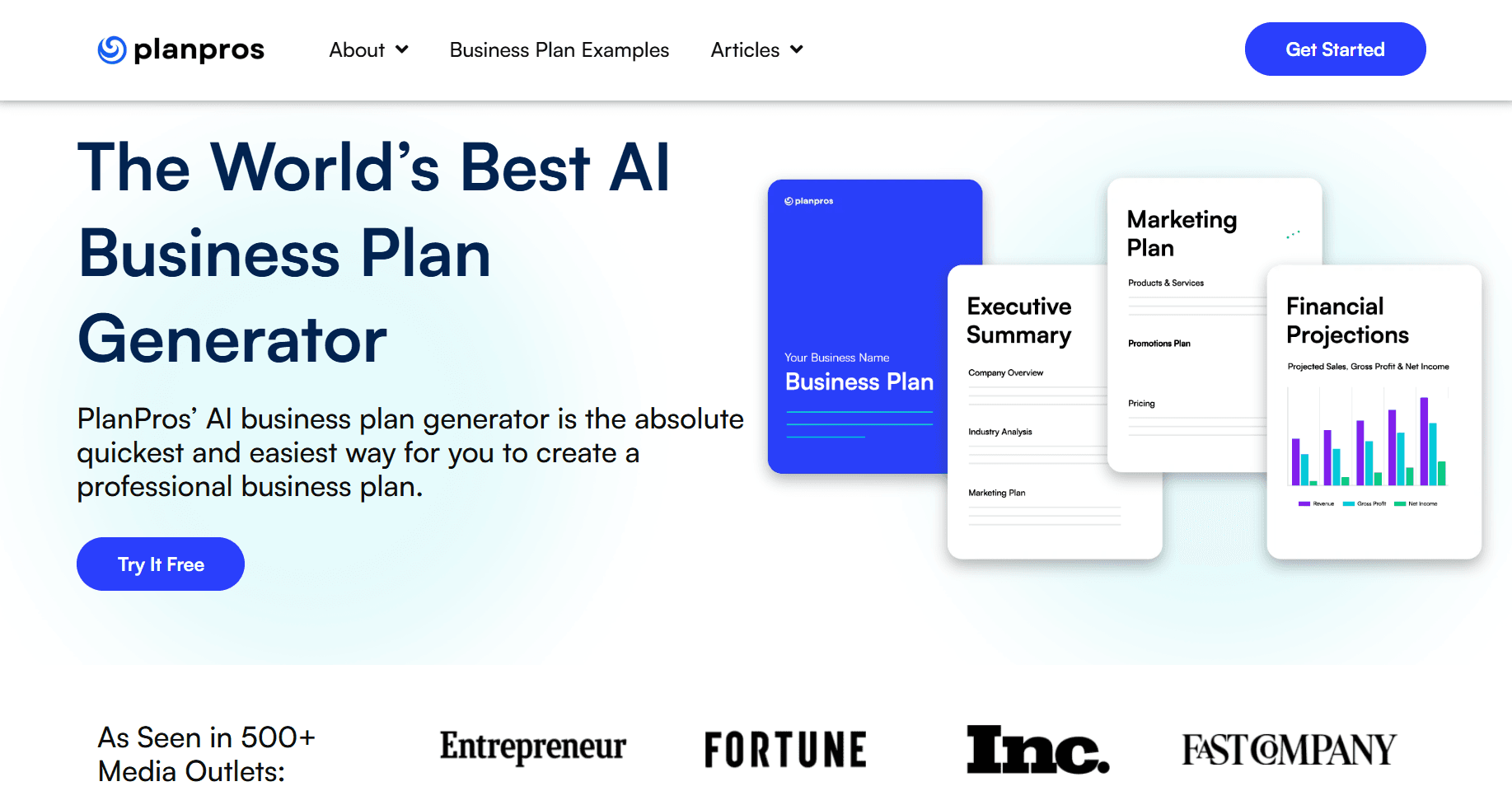
Best for: professional business plans with formal structure.
This platform is designed for entrepreneurs and small business owners who need a complete document for funding, strategy, or outside review. It is useful when the plan should look polished and include sections like executive summary, company overview, market analysis, operations, and financial projections.
For example, a service business preparing for outside funding can use it to explain the business model, customer base, competitors, expected revenue, and funding needs.
Compared with simpler generators, this option is more focused on producing a professional business plan format. That makes it useful for users who care about structure, readability, and presentation.
Best takeaway:
Use this option when you need a formal document for lenders, investors, or strategic planning.
Modeliks
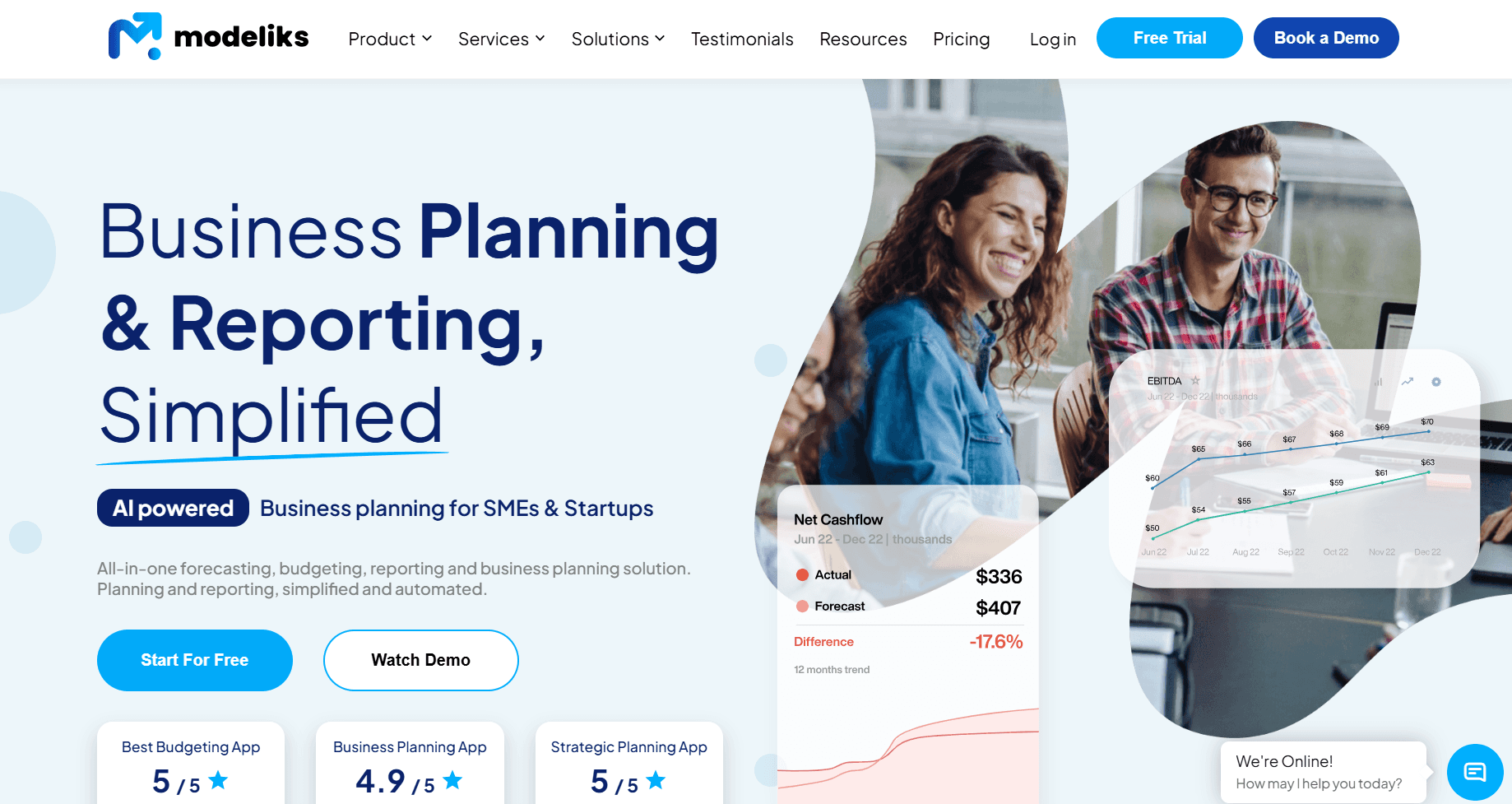
Best for: financial modeling, reporting, and connected planning.
This platform is useful for startups and SMEs that need planning connected with financial models, dashboards, pitch materials, and reporting.
For example, a startup preparing a funding round may need a written plan, financial model, pitch deck, and investor reporting structure. The tool is helpful when those materials should stay connected instead of being created separately in different tools.
This makes it a better fit for users who care about the relationship between planning assumptions and financial outputs. It is especially useful when the plan needs to support ongoing reporting, not just a one-time document.
Best takeaway:
Use this option when your business plan needs financial modeling and reporting support.
AI Business Plan Generator vs AI Business Planning Software
An AI business plan generator helps create a fast first draft. It is useful when you need structure, sections, and a starting point.
AI business planning software goes deeper. It can include financial modeling, budgeting, pitch decks, collaboration, reporting, and business tracking.
Type | Best for | Examples |
|---|---|---|
AI business plan generator | Fast first drafts | Bizplanr, 15MinutePlan, PlanPros |
AI business planning software | Detailed planning and business structure | Upmetrics, LivePlan, VentureKit, ProAI, PrometAI, Modeliks |
AI financial planning tool | Cash flow, budgets, and projections | LivePlan, Upmetrics, Modeliks |
AI startup planning tool | Idea validation and early strategy | IdeaBuddy, VenturePlanner, PrometAI |
AI legal document tool | Contracts and business documents | AI Lawyer |
A generator helps you start. Planning software helps you make the plan usable.
Which AI Business Plan Tool Should You Choose?
If you need... | Start with... |
|---|---|
Fast first draft | Bizplanr, 15MinutePlan, PlanPros |
Complete business planning workflow | Upmetrics, VentureKit, ProAI |
Loan or grant application plan | 15MinutePlan, LivePlan, PlanPros |
Startup idea validation | IdeaBuddy, VenturePlanner, Bizplanr |
Financial modeling | Modeliks, LivePlan, Upmetrics |
Strategy and valuation support | PrometAI, Modeliks, ProAI |
Legal documents after planning | AI Lawyer |
Solo founders usually need speed and clarity. Small businesses often need numbers, cost logic, and a format that lenders can understand. Startups preparing for outside conversations need a strong market story, realistic assumptions, and a clear explanation of how the business can grow.
The best tool is not always the most advanced one. It is the tool that fits the next step of your business plan.
Common Mistakes When Using AI Business Plan Generators
The biggest mistake is treating AI output as final. AI can sound polished even when it invents numbers, uses generic market claims, or misses important details.
Do not let AI create market data without checking it. If a plan says the market is “growing rapidly,” verify the claim with real sources, competitor research, customer interviews, or industry data.
Do not use the same plan for every audience. A bank cares about cash flow and repayment. Investors care about growth, market size, traction, and scale. Internal teams care about ownership, timeline, and execution.
Do not ignore financial assumptions. A cleaning business plan should not only say “$20,000 monthly revenue.” It should show how that number is built: jobs per month, average price, labor, supplies, fuel, insurance, and marketing costs.
Do not forget the documents that come after the plan. A startup may need founder agreements, contractor agreements, service terms, privacy policies, or vendor contract reviews before launch.
Conclusion
AI tools for business plans can save time, but only when they match the task. A simple generator can help with a first draft. A stronger planning platform can help with market research, financial logic, pitch materials, budgeting, and business tracking.
For quick drafts, start with Bizplanr, 15MinutePlan, PlanPros, or VenturePlanner. For complete planning, use Upmetrics, VentureKit, ProAI, PrometAI, LivePlan, or Modeliks. For idea validation, use IdeaBuddy. For legal documents, use AI Lawyer.
The best AI business plan tool is the one that helps you create the exact plan you need with the least cleanup after generation.
FAQ
Q: What are the best AI business plan tools?
A: The best tools depend on the task. Upmetrics, LivePlan, VentureKit, ProAI, PrometAI, and Modeliks are strong for detailed planning. Bizplanr, 15MinutePlan, PlanPros, VenturePlanner, and IdeaBuddy are better for quick drafts and early-stage planning.
Q: Can AI create a business plan for investors?
A: Yes, but the plan still needs review. Check market data, financial assumptions, competitor claims, customer acquisition costs, and funding use before sending it to investors.
Q: What is the difference between an AI business plan generator and business planning software?
A: A generator creates a fast draft. Business planning software usually adds budgeting, financial modeling, pitch materials, collaboration, reporting, and tracking.
Q: Which AI tool is best for financial projections?
A: LivePlan, Upmetrics, Modeliks, ProAI, and VentureKit are stronger choices for financial projections than general AI writing tools.
Q: Can AI help with market research for a business plan?
A: Yes, but AI-generated research should be verified with competitor websites, customer reviews, official statistics, reports, or real customer interviews.
Sources and References
You Might Also Like: